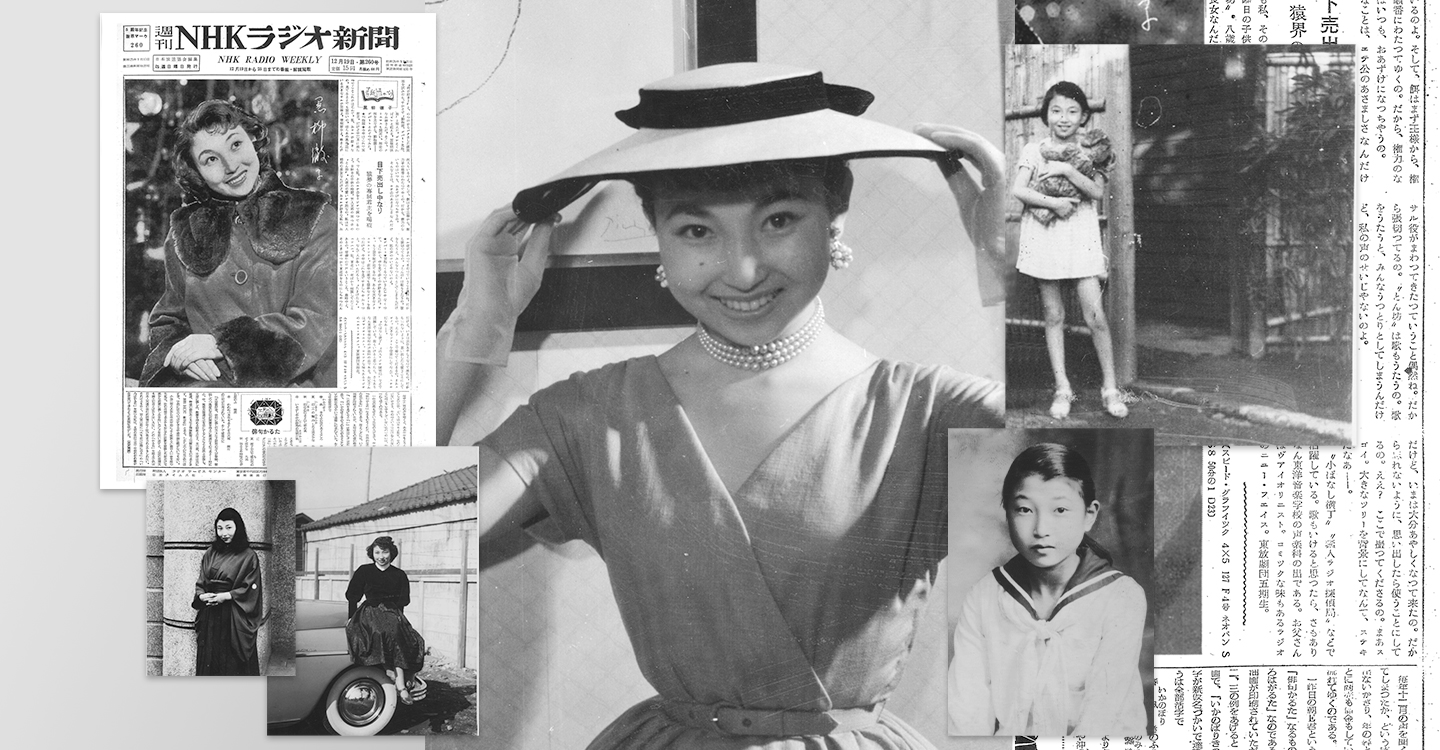
Introducing the Trailblazing Woman behind Totto-chan
Kodansha USA Throws a Celebration for the Little Girl at the Window
By Alexandra McCullough-Garcia, with editorial assistance by Daniel Joseph and Alvin Lu
The train rocked Totto as it chugged along in the dark, bound for Aomori Prefecture. She could see nothing at all through the window. Totto was perched in the middle of a two-seater bench. At her sides were not her mother, Noriaki-chan, or Mari-chan, however, but a middle-aged man and woman, neither of whom she knew. She was all alone. In her right hand, she clutched the train ticket Mother had given her as well as a note that read: Ueno, Fukushima, Sendai, Morioka, Shiriuchi.
It was the middle of March in the year the war would end.
— from Totto-chan, the Little Girl at the Window: The Sequel by Tetsuko Kuroyanagi, translated by Yuki Tejima
So begins one of the most thrilling chapters from Japanese postwar-cultural icon Tetsuko Kuroyanagi’s recently translated autobiography Totto-chan, the Little Girl at the Window: The Sequel. The heart-pounding scene picks up exactly where her original, world record-breaking memoir ended, and begins to answer the burning question left in the millions of hearts it captured: What ever happened to Totto-chan?
This year, on November 18, 2025—over four decades after Totto-chan first burst onto the global stage—Kodansha USA brings the world the story of how that little girl became a trailblazing, multifaceted star, internationally renowned philanthropist, celebrated author, and one of the most enduring media presences in Japanese entertainment.
“I am excited to announce that my memoir, Totto-chan, the Little Girl at the Window: The Sequel, will soon be released in English. It has been forty years in the making, and I put my whole heart and soul into it,” said author Testuko Kuroyanagi. “I hope you enjoy it!”
In celebration of Ms. Kuroyanagi’s career and legacy, Kodansha USA will also host events in New York City around the date of the book’s publication at the Japan Society, the New York Public Library, and Kinokuniya Bookstore (see Event Details below).
A Special Message from Tetsuko Kuroyanagi
Who Is Tetsuko Kuroyanagi?
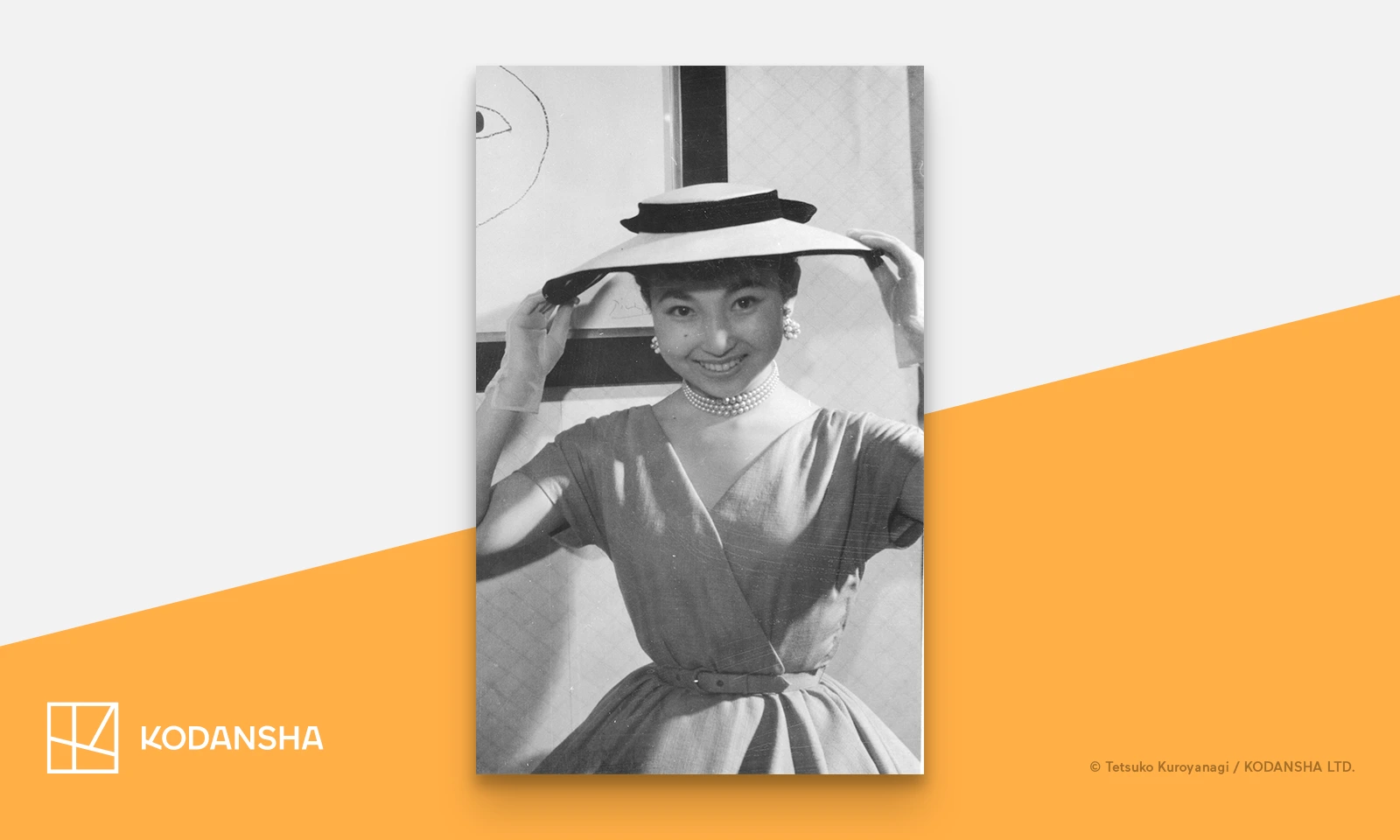
Above all an actor and TV celebrity, Tetsuko Kuroyanagi’s long career spans Japan’s rise from the ashes of World War II through the halcyon Bubble Economy years to the present day. “She’s just an institution. I mean, she really is just someone that everyone in Japan knows,” said Aaron Gerow, professor of Japanese culture and media at Yale University in a recent conversation with Kodansha USA. She is a figure “you need to know in order to understand Japan today,” like “Oprah, but with three times the length of her career.”
Tetsuko Kuroyanagi’s role in creating Japanese television was so central that she is sometimes called the country’s “first TV star.” After initially rocketing to fame on the radio in 1954, she became one of the very first women on Japanese television at the public broadcaster NHK, which had just branched out into the relatively new medium in 1952. She went on to act on stage, anchor the news, star in dozens of TV dramas, and host numerous shows that regularly garnered millions of viewers. One such show, a music program called The Best Ten which she hosted from 1978-1989, routinely captured over 40% of viewership, with more than 35 million viewers at its peak.
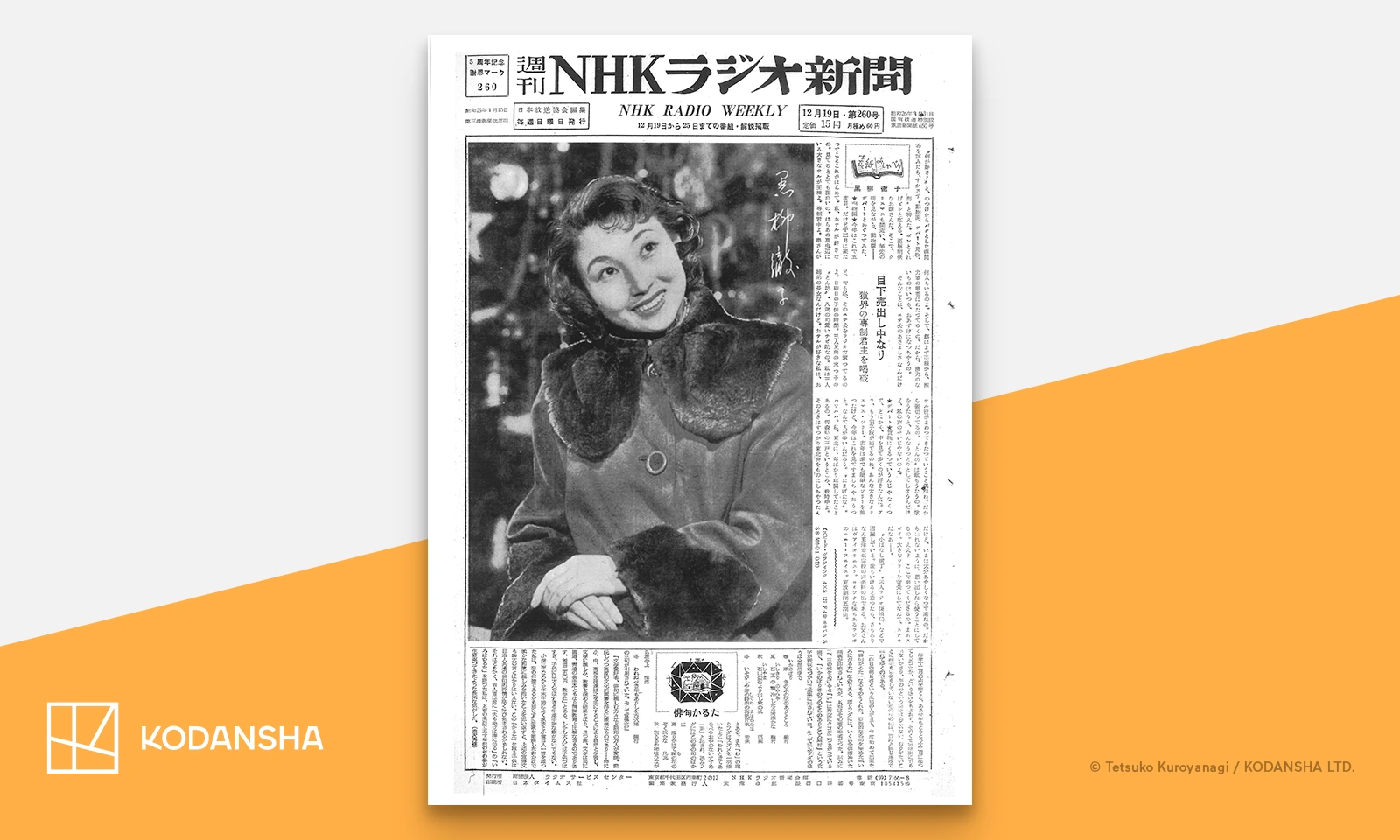
Her daily talk show Tetsuko’s Room, the first of its kind on Japanese TV, began broadcasting in 1976 on TV Asahi and is still on the air to this day. In the almost fifty years it has been running, Ms. Kuroyanagi has interviewed such varied and distinguished guests as Oscar de la Renta, Brooke Shields, Yo Yo Ma, Olivia Newton-John, Charlton Heston, Margaret Thatcher, Yoko Ono, Larry King, Naomi Campbell, Cyndi Lauper, David Copperfield, Mikhail Gorbachev (twice), the Blue Man Group, Cindy Crawford, Richard Gere, Lady Gaga, Dustin Hoffman, Tom Cruise, and Meryl Streep, not to mention the most popular and influential Japanese artists, actors, and musical groups of the last five decades. With each new episode aired, it once again breaks the Guinness World Record it first set in 2023 for the most TV talk show episodes hosted by the same presenter.
Although she has slowed significantly in recent years, Ms. Kuroyanagi is still a constant presence in Japanese entertainment. The most popular comedians have a working “Tetsuko-san” impression ready to deploy when needed, and it is an honor and symbol of success to be invited as a guest on her Tetsuko’s Room. Simply appearing next to her on programs such as TBS’s Hitachi Sekai Fushigi Hakken (Discovery of the World’s Mysteries), a variety quiz show on which she often competed as a contestant and regularly won, was enough to elevate people to stardom.
Ms. Kuroyanagi is also well known for her various philanthropic pursuits. Fascinated by the beauty of sign language since childhood, she used her book royalties to establish the Totto Foundation, a charitable organization that provides assistance to people with disabilities, with a particular focus on the deaf. The Totto Foundation also offers sign language lessons and runs the Japanese Theatre of the Deaf, which trains deaf actors and holds performances meant to be enjoyed by the hearing and hearing impaired alike. Ms. Kuroyanagi has likewise collaborated with the American Theatre for the Deaf, twice inviting troupes over to Japan for performances. She appeared on stage with them, acting in sign language.
A devoted conservationist, she is credited as being the person who made the panda popular in Japan and is often seen with panda imagery on her television appearances. Her advocacy helped bring the first two panda cubs from China to Japan in 1972 and has become such a well-known aspect of her celebrity that it has given rise to the common statement in Japan: “Tetsuko equals pandas.” She currently sits on the board of directors for the World Wildlife Fund Japan and is the Honorary Chairman of the Panda Protection Institute of Japan.
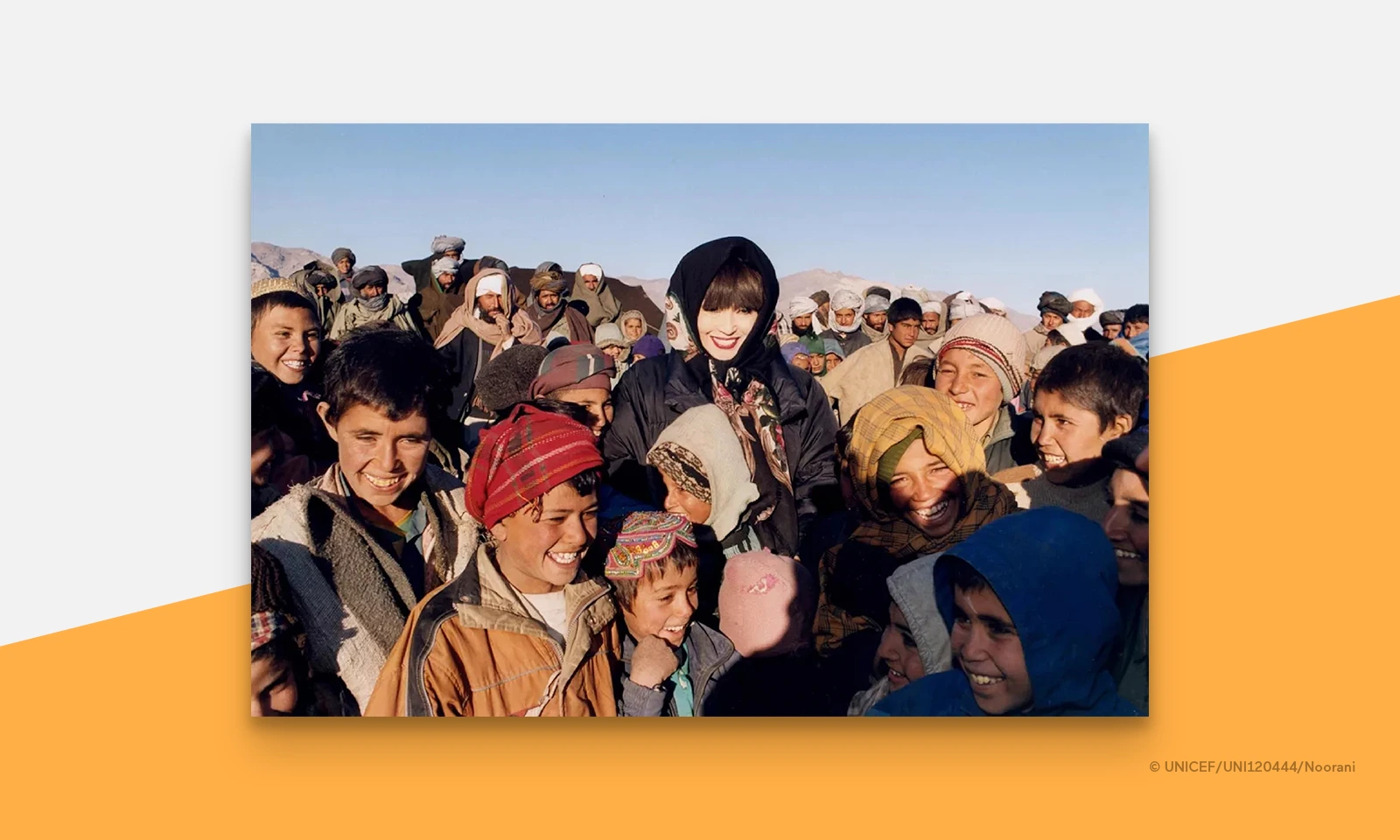
Perhaps most famously outside of Japan, Ms. Kuroyanagi was appointed a UNICEF Goodwill Ambassador in 1984, the first from Asia. In that capacity she has traveled to almost forty countries to raise awareness and support children suffering from conflict, poverty, and disease, documenting her missions in video reports. Ms. Kuroyanagi regularly devotes episodes of her talk show to fundraising efforts, and according to the UN, she has raised more than $55.5 million for UNICEF programs.
Despite the magnitude of these charitable undertakings, Ms. Kuroyanagi’s most impactful, and perhaps most enduring, contribution to culture has come through literature: her bestselling Totto-chan books have become certified classics and some of the world’s most beloved literary depictions of childhood.
A Certain Glow: Introducing Totto-chan
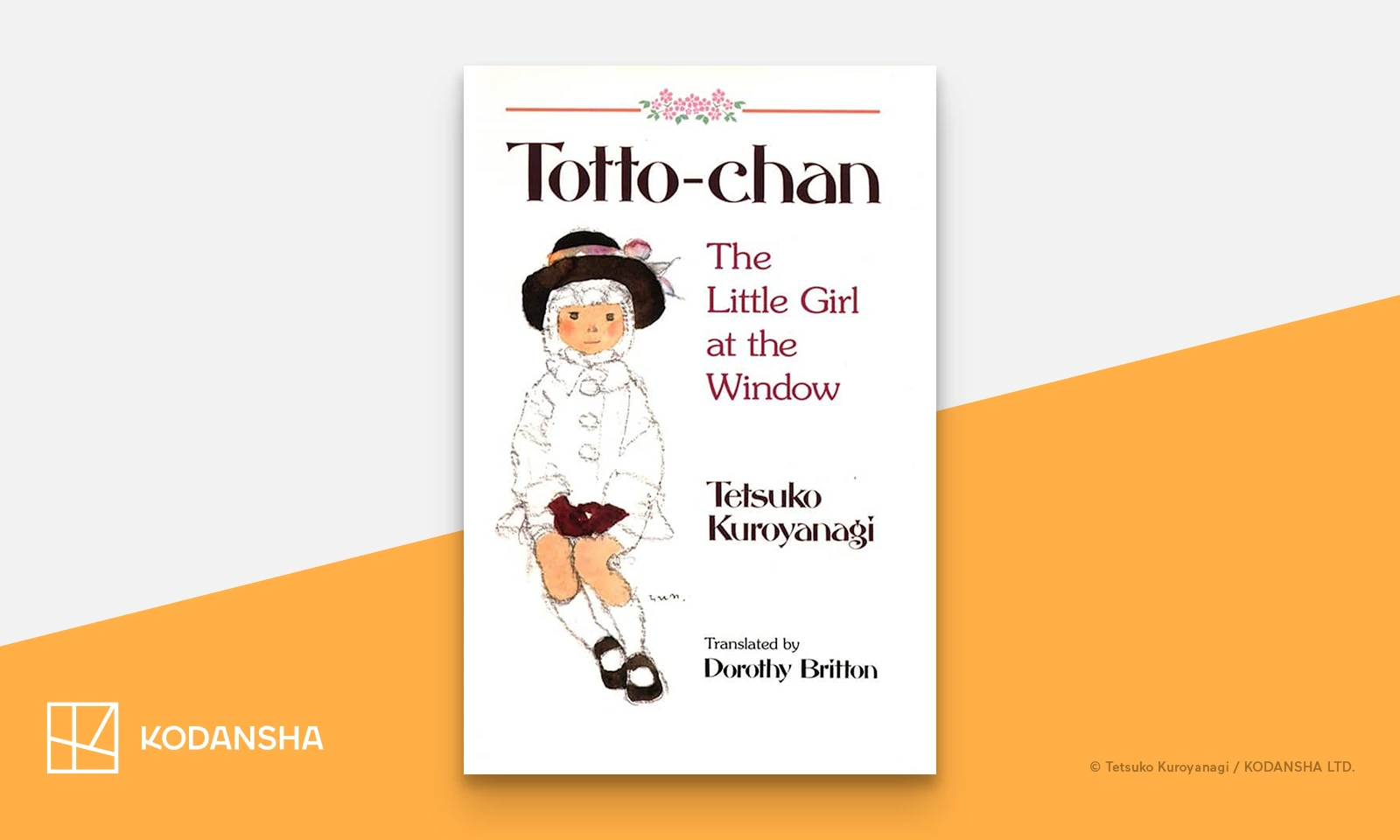
Totto-chan: The Little Girl at the Window was first published in 1981, when the author was already a well-known actor and celebrity in Japan appearing nearly daily on a variety of television programs. It is told from the point of view of Totto-chan (as Ms. Kuroyanagi was called as a child), an uncontrollably curious little girl whose antics get her expelled from first grade after only one week. Thanks to the unconventional teaching methods of headmaster Sousuke Kobayashi, however, she manages to find the goodness in herself and community with other misfits at Kobayashi’s Tomoe Gakuen, a school which repurposed decommissioned train cars as classrooms and embraced students with diverse needs.
On the one hand an artless narration of the author’s elementary school years, the book also shocked Japanese society with the groundbreaking approach to education it detailed, one which prioritizes trust in children and allows them an unprecedented amount of freedom. Ms. Kuroyanagi’s fond retelling of her experience provided a compelling case for educational reform and encouraged children, parents, and teachers alike to reconsider Japan’s demanding school schedule and curricula.
Totto-chan: The Little Girl at the Window quickly became a literary sensation and sparked a veritable “Totto-chan Boom” of media attention and popularity. By the end of 1982, it had become the bestselling book of all time in Japan—a distinction it maintains to this day, with over eight million copies sold domestically—and has gone on to sell over twenty-five million copies to date worldwide, in over thirty languages. In 2023, it broke the Guinness World Record for most copies published for an autobiographical memoir by a single author.
“It kind of represents Japan in the 1980s,” which was, according to Professor Gerow, an “efflorescence of Japanese pride and culture, as well as a time of various kinds of Japanese popular culture that later on become quite important,” such as anime and manga. Assisted by the artist Chihiro Iwasaki’s loving illustrations of childhood included in the book, it also tapped into a burgeoning shojo bunka (young girl’s culture), which valorized the stories of assertive young heroines. The memoir became a bright point in a long genealogy of plucky little girls in Japanese popular culture in the late 1970s and 1980s, stretching from the beloved anime adaptations of Heidi and Anne of Green Gables to the mischievous and endearing Chibi Maruko-chan. “In a period defined by intense economic competition, Totto-chan and her compatriots had an extraordinary ability to resonate with readers and offer an alternative way of being in the world,” said Nathan Shockey, associate professor of Japanese at Bard College,“one that would continue to inspire, from the works of Studio Ghibli up through contemporary anime like Little Witch Academia.”
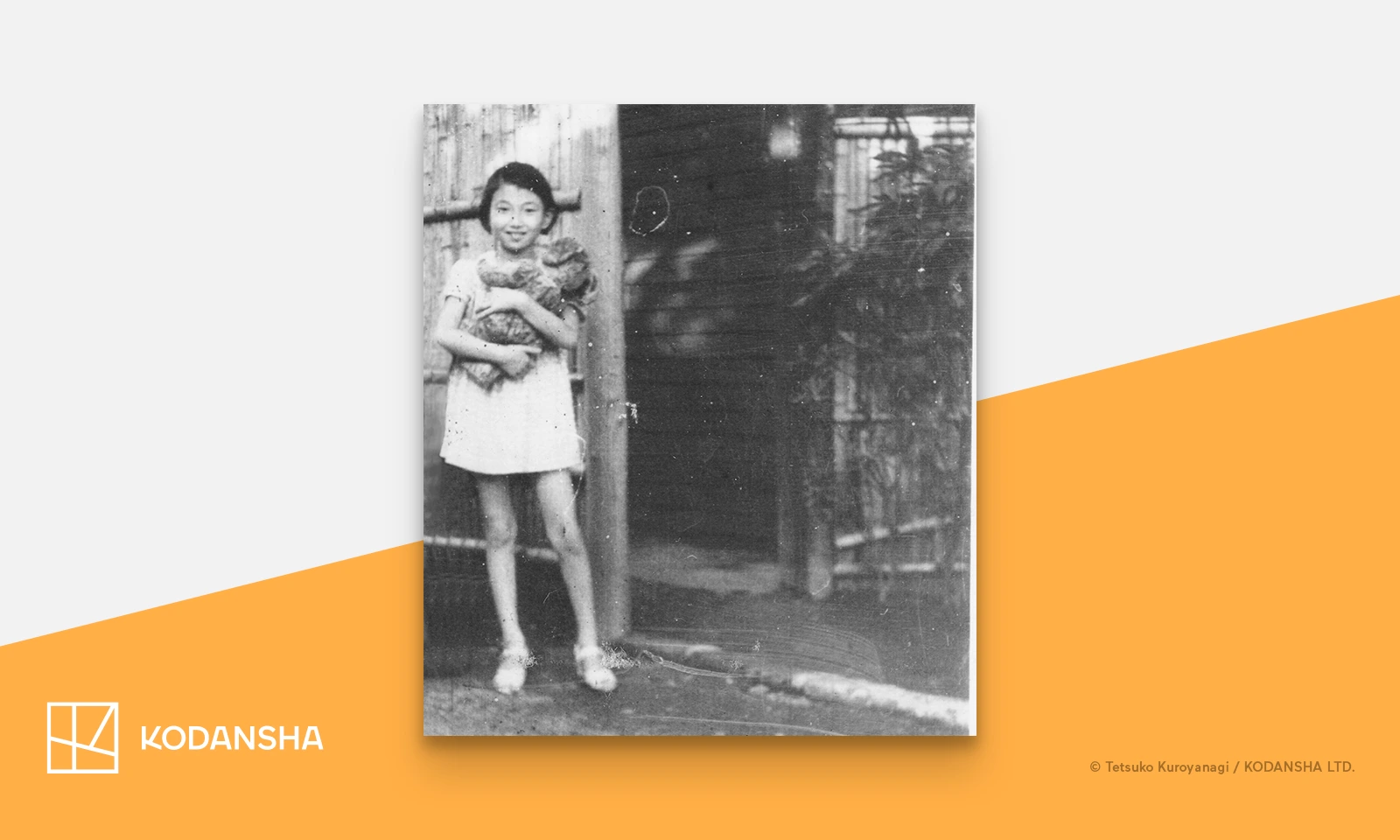
More than a simple memoir, Totto-chan: The Little Girl at the Window became a literary classic thanks to the way it ineffably evokes the magic of childhood. For contemporary readers outside Japan, its unforgettable portraits of whimsical walks to a nearby temple, delighting in the beauty of a fine silk bow, and “camping” in the school hall to see a new railroad car roll onto campus captured the wonderful, soft pastel glow of a little girl’s life in simpler times.
Little Totto Grows Up: The Sequel
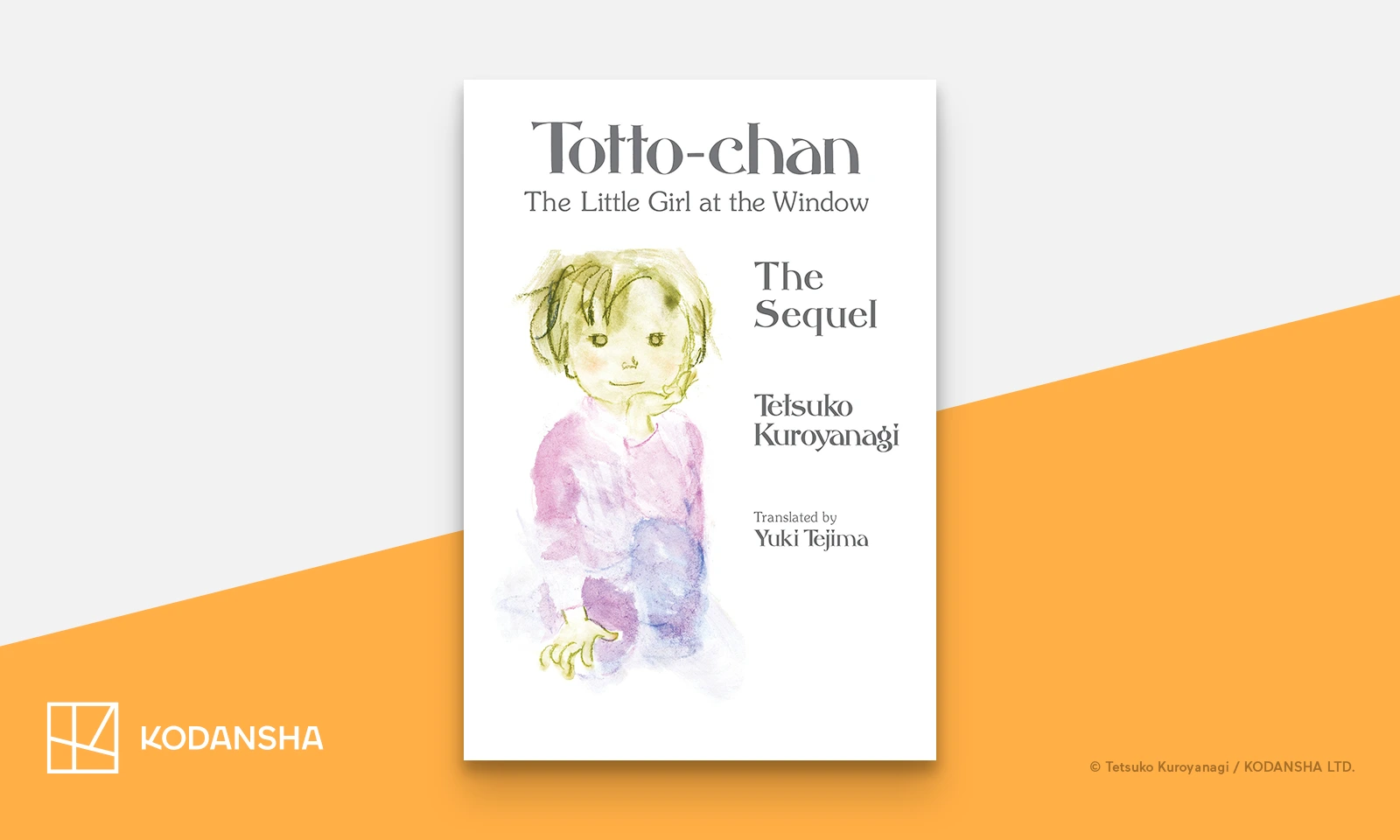
Little Totto did not stay little forever, however, and in 2023 Tetsuko Kuroyanagi published the definitive continuation of her tale. Totto-chan, the Little Girl at the Window: The Sequel invites readers back into that charming world as it stands on the brink of change. Through the innocent eyes of a child, it chronicles how the shadow of war began to snuff out the joys in Totto’s life until some days, she had no more than fifteen roasted soybeans to eat. The more the war escalated, the more frequently her family was forced to seek shelter in the small bunker they had dug in their yard. One night, Totto recalls seeing the Tokyo sky blaze red with “a terrifying glow” so bright, she could read her schoolbooks in the yard as if in broad daylight.
If Kuroyanagi’s scenes of war hit close to home, it’s no coincidence: they are as much a reflection of our world today as of her childhood memories. In an interview with The New York Times, Ms. Kuroyanagi said she was compelled to write this follow-up partly in response to the scenes she was witnessing out of Ukraine, and mentions in the afterword to The Sequel that part of her motivation in penning the memoir was to leave a record of her own wartime experiences.
And yet, The Sequel is much more than a chronicle of wartime struggle. It is a tale of resilience, of the courage to dream, and of extraordinary achievement in the face of seemingly insurmountable odds. Ms. Kuroyanagi’s rise from the literal ashes of war to the pinnacle of Japanese entertainment is a timely reminder of the strength of the human spirit. It is a story sure to inspire a whole new generation to dream big, wander when unsure, and chase what you love. “The Sequel is a book you can revisit over and over again and come away with brand new discoveries each time,” said Kodansha USA Publisher Toshihiro Tsuchiya. “It is a story you can appreciate at any age and at every age.”
Event Details
Totto-chan, the Little Girl at the Window: The Sequel goes on sale at bookstores everywhere November 18, 2025. To commemorate this long-awaited release, Kodansha USA will be sponsoring the following book-launch events in New York City:
-
Book talk with Translator Yuki Tejima at the New York Public Library 53rd Street Branch
- Date/Time: [TK time], Saturday, November 22, 2025
- Location: 18 West 53rd Street, New York
- Admission: Free
- More Info: [TK weblink]
-
Book signing with Translator Yuki Tejima at Kinokuniya Bookstore
- Date/Time: [TK time], Monday, November 24, 2025
- Location: 1073 Avenue of the Americas, New York
- Admission: Free
- More Info: [TK weblink]
-
Screening of Totto-chan: The Little Girl at the Window feature anime and panel discussion at the Japan Society
- Featuring:
- Yuki Tejima, translator
- Alexandra McCullough-Garcia, editor
- Nathan Shockey, Associate Professor of Japanese at Bard College
- Date: Tuesday, November 25, 2025
- Time: Doors 6 p.m, Screening 7 p.m.
- Location: 333 E 47th Street, New York
- Admission:
- $16 general admission
- $12 students/seniors/persons with disabilities
- $8 members
- More Info: japansociety.org/film/
- Featuring: